





The astronomy outreach project keeping girls in schools
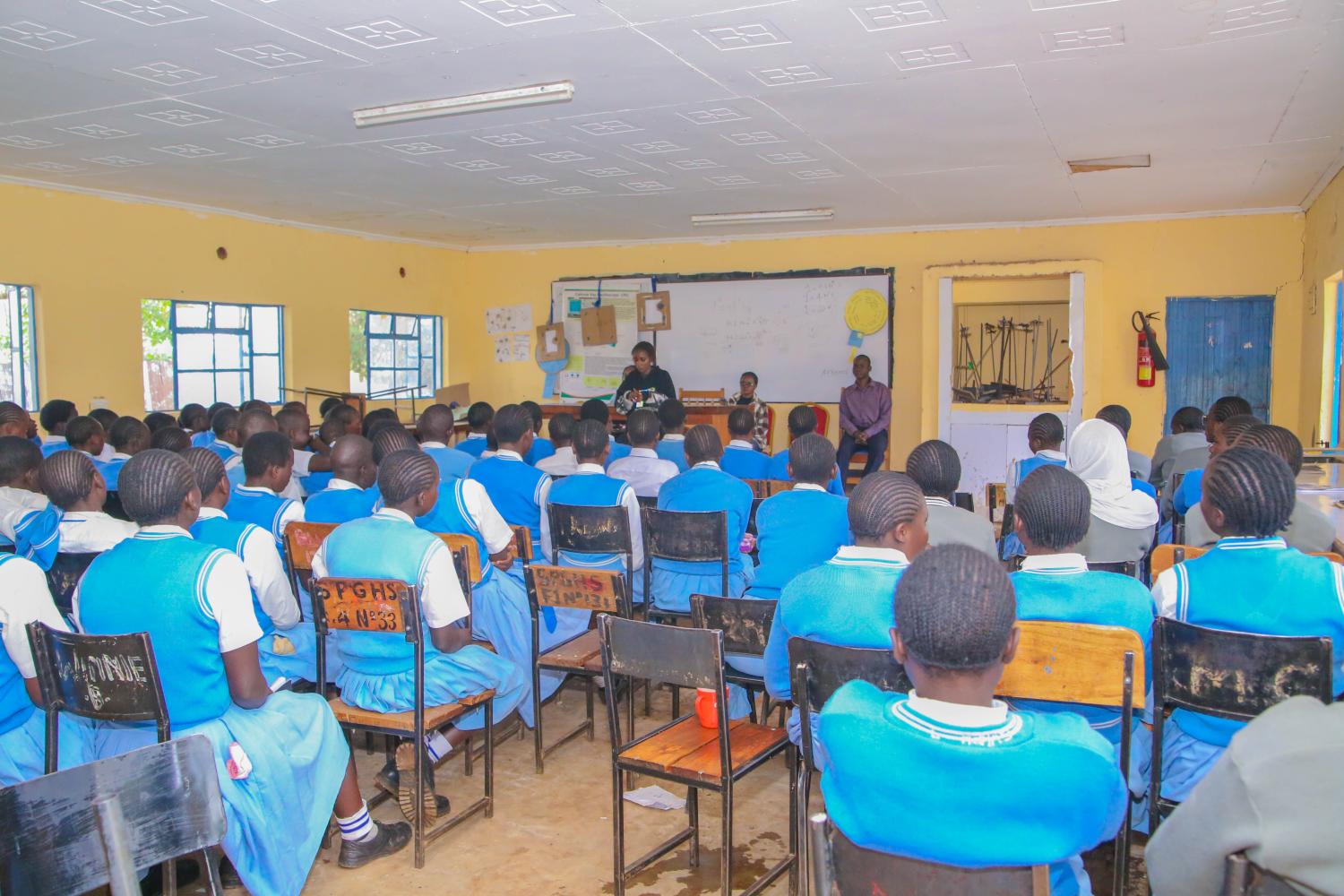
The Elimisha Msichana Elimisha Jamii Na Astronomia (EMEJA) initiative – Swahili for “Educate a girl, educate the entire community with Astronomy” – addresses a challenge across rural East Africa, where many girls drop out during the transition from primary to secondary education. Using astronomy outreach and mentorship programmes, girls are empowered to stay in education and choose STEM subjects in high school.
Since the project’s start in 2019, EMEJA has reached more than 40,000 girls and hundreds of teachers across 31 schools in Kenya – one of the SKAO's African partner countries – and Uganda. It has been supported with funding from the International Astronomical Union’s Office of Astronomy for Development.
The SKA Observatory is backing the project through an annual bursary of €15,000 over the next three years from 2026. The new financial support enables the project to scale up and expand to other rural areas and more schools across East Africa, with the aim of reaching more than 100,000 girls.
As part of this expansion, the project will establish regional STEM hubs for astronomy education and digital literacy, connected to surrounding schools and communities to ensure equitable access to digital resources.
In early July 2026, the EMEJA project delivered two major outreach activities in Kenya: a mentorship programme across 16 primary schools reaching 3,302 learners and around 300 parents, and a two-day Astro-STEM workshop at another six secondary schools giving 466 learners hands-on experiences in physics, computing and astronomy.
In Uganda, interactive sessions at three primary schools reached another 279 learners, teaching them about the Solar System, gravity and the Universe, giving them the opportunity of looking through a telescope and spotting sunspots with eclipse glasses.
Irene Scavai, a first year secondary school student in Kenya, reflected on the experience: "Today, we learned how to use a computer. This was my first time using one. Our mentor, Elvis, encouraged us to maintain a positive attitude towards STEM subjects. I have also learnt about potential careers in STEM in the near future. Moving forward, I will approach not just physics but all sciences, including mathematics, with a positive mindset."
The SKAO's funding is provided from its sustainability fund, which supports the Observatory's sustainability commitments. These include advancing education and capacity building in STEM and contributing to initiatives that inspire and develop the next generation of scientists, engineers, and technicians.