




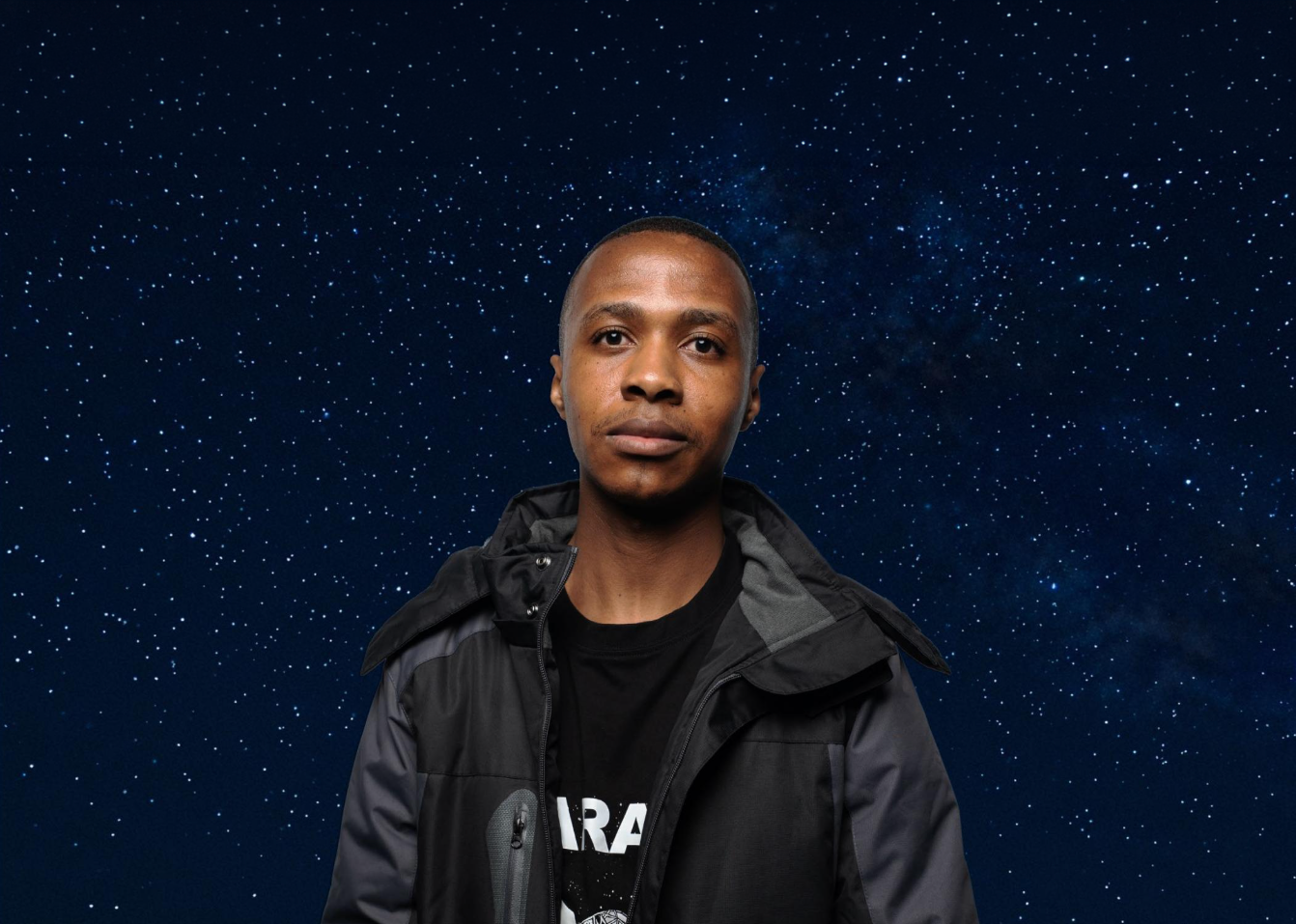
Team SKA: Isaac Magolego, radio astronomer
Radio astronomer Isaac Magolego, now in the final year of his PhD at the University of the Witwatersrand in Johannesburg, is one of those students. Supported by SARAO funding through university, he is now leading groundbreaking studies with the MeerKAT radio telescope (see page 16). He spoke to us about growing up in rural South Africa, the impact that HCD funding has had on his life and career, and how the SKA telescopes will advance his science.
Tell me about your early life, your family and where you grew up.
I was born and raised in Mmakaunyana, a rural village just outside Mabopane, north of Pretoria in South Africa. I come from a close-knit family where hard work, resilience and community were central to everyday life. Like many families in rural areas, we did not have much, but we had strong values, respect for education, perseverance, and the belief that if you work hard, you must keep moving forward, even when the path is unclear
Growing up, life was very practical. Access to resources was limited, and many things that others take for granted – stable electricity, exposure to different careers, or even knowing people who had gone to university – were not always available. But what we did have was curiosity. I was fascinated by how things worked: radios, batteries, electricity and cell phones. At the time, I did not know that this curiosity had a name or that it could become a career.
My family played an important role in shaping who I am. My parents made real sacrifices to support my education, even when it was financially difficult and the outcome was uncertain. Choosing a path like astronomy was not an obvious or safe option, and there were real concerns about employment and sustainability. But they believed in me enough to take that risk, and that belief stayed with me throughout my journey.
Growing up in a rural community also shaped how I see the world. It taught me humility, responsibility and the importance of lifting others as you progress. It made me very aware that talent exists everywhere, but opportunity does not. That understanding is something I carry with me today, especially in my work with large science projects like MeerKAT and the SKA project, which are not only about discovery, but about changing who gets to participate in global science.
In many ways, my early life gave me the foundation I needed, resilience, curiosity and perspective, long before I ever stepped into a university or a research environment.
What kind of things did you enjoy doing and learning about as a youngster?
As a youngster, I was always curious about how things worked. I enjoyed taking an interest in everyday technology around me, things like radios, batteries and anything related to electricity. If something stopped working, I wanted to understand why. Even when I couldn’t fix it, the process of trying to understand it fascinated me.
I also loved learning through asking questions. I was the kind of child who would ask, “Why does this happen?” or “How does that work?”. Sometimes I didn’t have access to books or the internet to find answers, but that curiosity stayed with me. It taught me to think, to observe and to reason from what I could see around me.
Outside the classroom, I was very active and expressive. I used to dance a lot, especially at school and community events. Dance gave me confidence, discipline and a way to express myself creatively. Looking back, it also taught me things like rhythm, coordination and teamwork, skills that surprisingly connect well with science, where collaboration and structure matter.
Later on, my curiosity extended to the natural world and the sky. Growing up in a rural area, the night sky was dark and full of stars, and it naturally sparked a sense of wonder. I didn’t yet know that people could study the Universe for a living, I just knew that it made me ask big questions.
At school, I found myself enjoying subjects like maths and science because they helped me make sense of the world in a structured way. They gave language to the questions I had always been asking.
When did you become interested in space and astronomy?
My interest in space and astronomy did not begin as a childhood dream of becoming an astronomer. It began as curiosity about how the world works. But the point where that curiosity became astronomy was through SARAO’s Human Capital Development (HCD) programme.
When I entered university, I still did not fully understand what astronomy was as a career, especially radio astronomy. Through the HCD programme, I was exposed to astronomy in a very deliberate way, through hands-on, skills-based experiences that allowed me to see myself inside the system. That is when I realised that astronomy was not only exciting, but that I could contribute meaningfully to it. From that point on, my interest turned into commitment, and eventually into a career.
How did your journey through the SARAO funding programme begin?
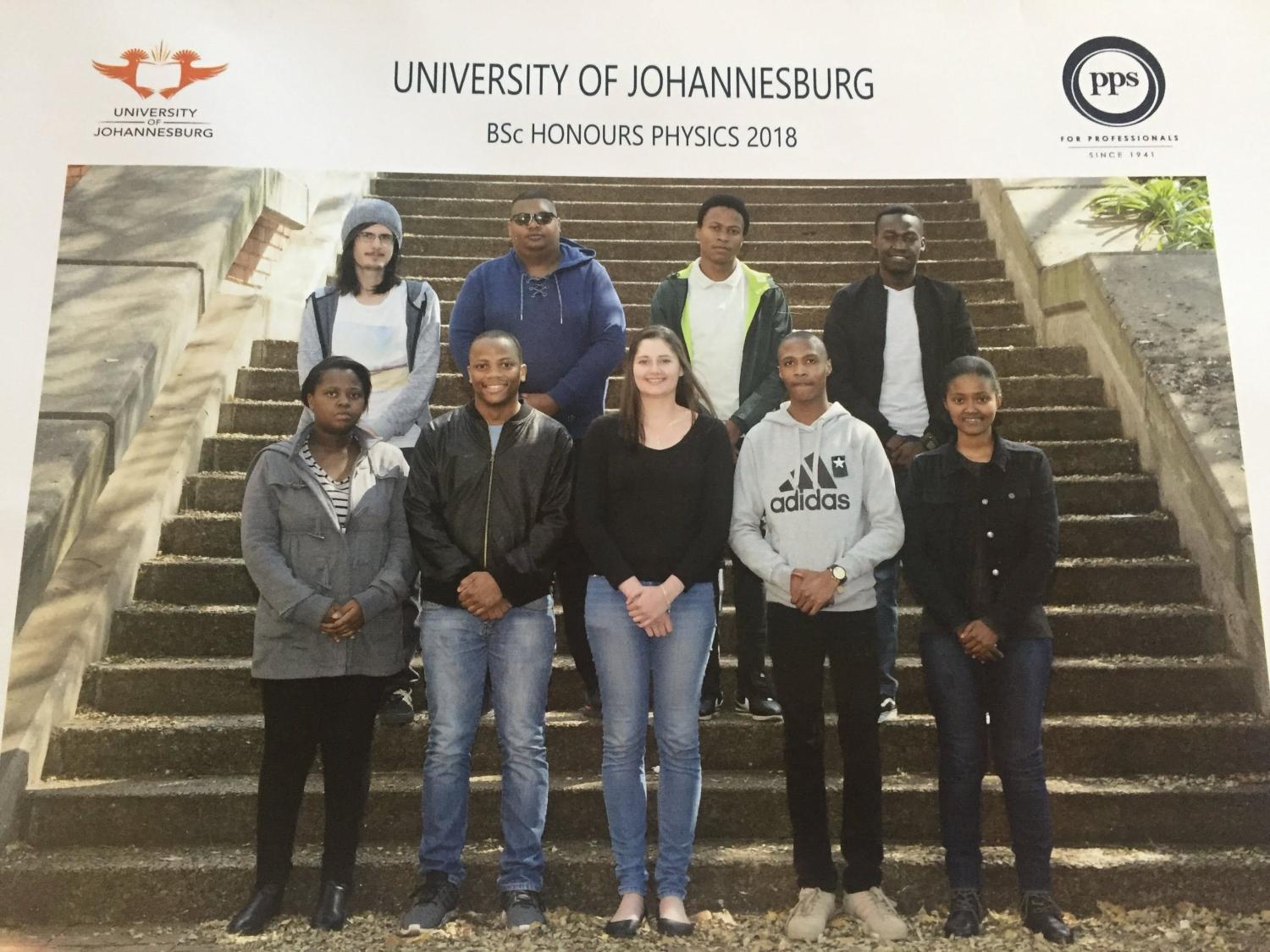
When I started my undergraduate studies, my family had taken out a loan to help me get to university. That pressure forced me to work extremely hard in my first semester, because failure was not an option. After that first semester, I was awarded the SARAO Human Capital Development bursary. From that point, my journey became one of continuity rather than uncertainty. The programme did not just fund my studies for a year or two, it supported me consistently from my undergraduate degree in 2015, through Honours, my MSc, and now into my PhD.
Alongside financial support came mentorship, internships, workshops and exposure to real research environments. Through the HCD programme, I was able to intern at SARAO, work directly with researchers, and eventually lead data processing and analysis for international MeerKAT collaborations.
So my journey began with financial need, but it grew into something much bigger, a long-term pathway that transformed a rural student into an active contributor to global science. That continuity is what made the difference.
How would you sum up the impact of that support on your career?
The impact of that support has been transformational, not just for my career, but for my entire trajectory in life.
At the most basic level, it removed uncertainty. Before the SARAO support, I was constantly worrying about whether I would be able to continue studying. Once that burden was lifted, I could focus fully on learning, on doing well academically and on exploring what I was capable of.
Professionally, the programme gave me access to opportunities I would not have found on my own, including connecting me to mentors who were active in international science. I was not just observing science from a distance, I was trained to participate in it, to lead parts of it and to contribute original work.
It also gave me something less tangible but equally important: confidence and belonging. Being funded and supported over many years sent a powerful message that I was trusted, that I belonged in this space and that my potential was worth investing in. That belief changed how I saw myself, from a student hoping to survive, to a scientist capable of contributing globally.
Let’s talk about your science interests. What have you been studying with MeerKAT and what do you find most fascinating about it?
My research with MeerKAT focuses on studying galaxy clusters, which are the largest gravitationally bound structures in the Universe. In particular, I study faint, diffuse radio emission in these clusters, things like radio halos and relics which trace energetic processes such as mergers, turbulence, shocks and cosmic magnetic fields.
What makes this work especially fascinating is that these signals are incredibly faint. They are not produced by individual galaxies, but by particles and magnetic fields spread across millions of light-years of space between galaxies. Detecting them requires extremely sensitive instruments and very careful data processing, which is where MeerKAT really excels.
I work extensively on calibrating and imaging MeerKAT data to pull out these weak signals from noise, and then analysing what they tell us about how galaxy clusters evolve over cosmic time.
Through this work, we’ve been able to detect some of the most distant examples of this kind of diffuse radio emission ever observed.
What fascinates me most is that this research connects the very large with the very subtle. By studying faint radio glows in the most massive structures in the Universe, we learn about fundamental processes like particle acceleration, magnetic fields and how energy is transported on the largest scales.
What are you hoping to discover when the SKA telescopes come online?
When the SKA telescopes come online, I’m hoping to uncover a population of diffuse radio sources in galaxy clusters that we know must exist, but that are currently just below our detection limits. With MeerKAT, we’ve already seen hints of this hidden Universe: ultra-steep spectrum radio halos, very faint relics and large-scale emission that only appears when we stack many clusters together. The SKA will allow us to detect these sources directly, cluster by cluster.
Scientifically, this means being able to trace how magnetic fields and high-energy particles evolve over cosmic time, especially in low-mass and high-redshift systems that are currently under-explored. We’ll be able to test models of turbulence, shocks and particle acceleration with much greater precision, and finally understand why some clusters host diffuse radio emission while others do not.
On a broader level, I’m excited about what the SKA telescopes will do for discovery-driven science. The sensitivity and data volume will almost certainly reveal phenomena we haven’t predicted yet. That’s often where the biggest breakthroughs happen.
South Africa’s radio astronomy community has grown rapidly with your generation – what does it mean for you to be part of this? Are you also interacting with the wider international community in your science?
I grew up at a time when MeerKAT was still an idea on paper, and I am now part of the generation that is using it to make real discoveries. That transformation happened within my own lifetime, and being able to contribute to it feels both humbling and motivating.
What makes this moment special is that South Africa is not just participating in global astronomy, we are shaping it.
MeerKAT has set new standards in sensitivity and imaging quality, and the skills being developed here are directly feeding into the SKAO era. As young scientists, we are growing alongside the infrastructure, learning how to work with big data, advanced computing and large international collaborations from an early stage in our careers.
I hope to be part of a generation of African astronomers who use it not only to answer big scientific questions, but also to train others and build lasting scientific capacity for the future.
Internationally, my work is deeply collaborative. I work closely with colleagues from the South Pole Telescope team and researchers across Europe, Canada and the US. These collaborations are built on mutual respect and shared expertise; South Africa is not just providing data, but leadership in data processing, analysis and scientific interpretation.
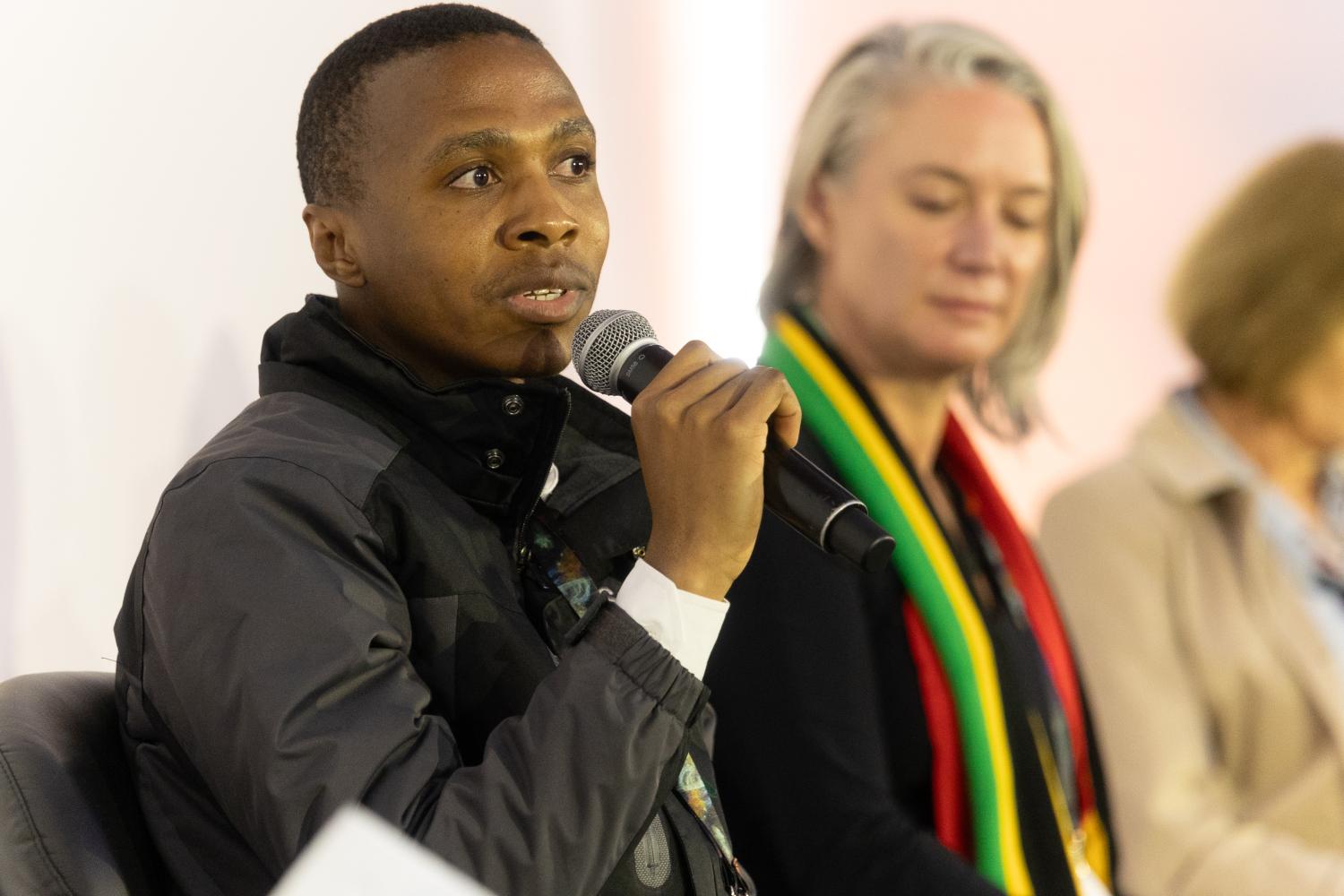
In September you were part of a panel at the G20 event at the SKA-Mid site in South Africa, discussing the wider impact of radio astronomy investment in South Africa. Tell me about that experience - what do you think the event achieved?
Being part of the G20 panel at the SKA-Mid site was a deeply meaningful experience for me, both professionally and personally. It was one of those moments where I could clearly see how individual journeys connect to national and global decisions.
The event brought together science ministers, policymakers and scientific leaders at the place where the science is actually happening. That mattered. Standing at the SKA-Mid site and hearing about investment, development and global collaboration while surrounded by the infrastructure itself made the conversation real and grounded, not abstract.
What I think the event achieved was helping decisionmakers see radio astronomy not just as a scientific endeavour, but as long-term strategic infrastructure.
Through the discussions, it became clear that investments in MeerKAT and the SKA are not only about discoveries in space, but about people, training young scientists, building data and AI skills, and creating opportunities that ripple into communities and the broader economy.
From my perspective, the most powerful outcome was showing what sustained investment can produce. I was there as someone who has been supported by South Africa’s astronomy programmes from undergraduate level through to advanced research, now contributing to international collaborations. That human story helped connect policy decisions to real outcomes.
I believe the event reinforced the idea that when countries invest in science over decades, the returns extend far beyond research papers, they build capability, confidence and global leadership.
What do you like to do outside of work? Are there any hobbies or activities that particularly help you to wind down? Or perhaps a hidden talent that people would be surprised by?!
I enjoy gaming a lot. It’s a way to relax, challenge myself and sometimes even connect with friends online. I also play tennis regularly, which I find both fun and a great way to stay fit while enjoying some friendly competition. I really enjoy the intensity and explosiveness of short-distance running, too. It’s a good way to blow off steam and push myself physically.
My sprinting ability surprises people, because most of my friends and colleagues think of me as more into strategy and focus-based activities, like gaming. I enjoy that mix of mental and physical challenges, which helps me maintain balance and recharge outside of work.
If you could give advice to your younger self about getting into astronomy, or STEM in general, what would it be?
First, be curious and persistent, never be afraid to ask questions or explore something that seems complicated or challenging. STEM is full of problems that can feel overwhelming at first, but with patience and consistent effort, you can make real progress.
Second, seek out opportunities to get hands-on experience as early as possible. Whether it’s joining science clubs, participating in school projects, doing internships, or even just building your own small experiments – practical experience teaches you more than any textbook can.
Third, don’t be afraid of failure. In research and STEM, experiments and projects often don’t work the first time and that’s part of the learning process. Each failure is an opportunity to understand the problem better and improve your approach.
Finally, connect with people, mentors, teachers and peers. Astronomy and STEM thrive on collaboration and having supportive mentors or peers can guide you, inspire you and open doors that you might not find on your own.
What has been the highlight for you so far?
One of the biggest highlights of my journey so far has been seeing my PhD project grow from a single idea into a dataset and set of results that are now shaping how we study diffuse radio emission in galaxy clusters. A particularly memorable moment was a trip to the United States where I met the South Pole Telescope collaborators at the University of Illinois and the University of Chicago. Presenting my results to them and seeing how positively they were received was a huge confidence boost. That experience really motivated me to push hard on writing up my thesis and getting the science out into the community.
Behind all of this, I’ve been incredibly fortunate in my mentorship. Prof. Roger Deane and Prof. Kshitij Thorat taught me how to think independently, to ask hard questions of my own science, and to take ownership of my work. And when it comes to MeerKAT data processing and imaging, Prof. Ian Heywood has been a constant source of guidance and encouragement and, as I like to say, my hype man, often reminding me not to forget him when I am famous!