


SKAO and UN host joint workshop on preserving dark and quiet skies
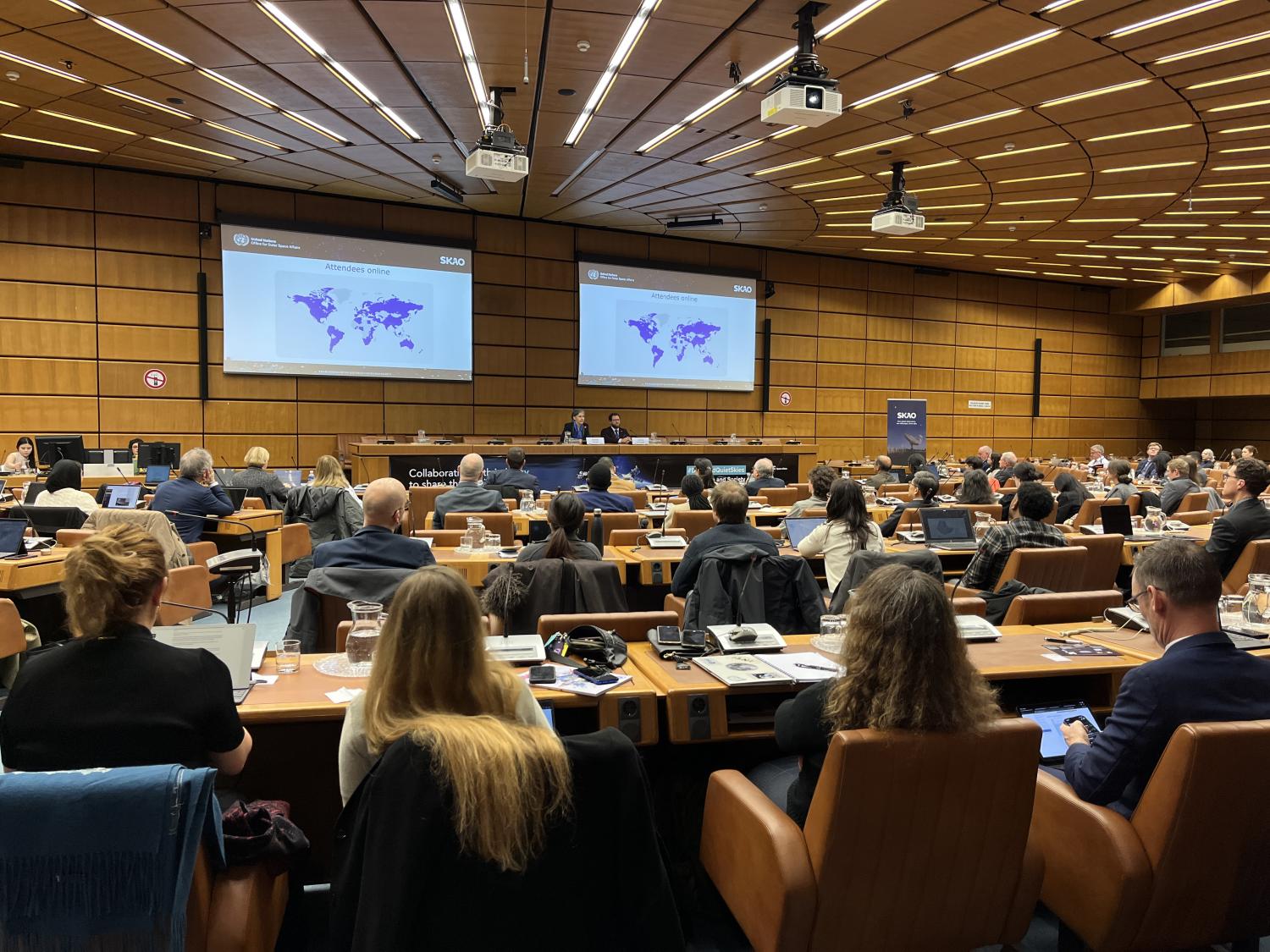
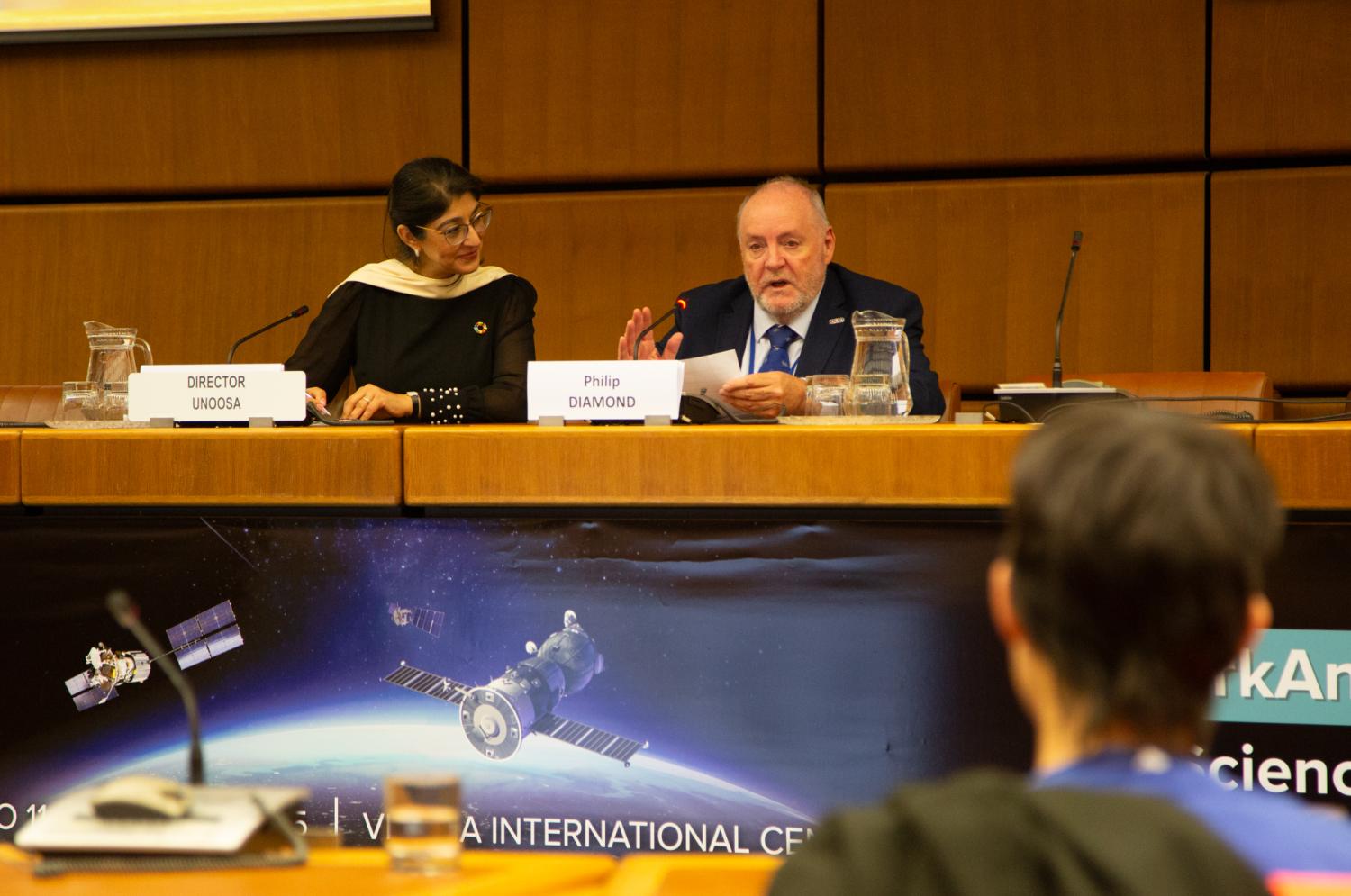
Eighty-six countries were represented among the more than 200 participants at the Workshop on Dark and Quiet Skies for Science and Society, co-hosted by the SKAO and the United Nations Office of Outer Space Affairs (UNOOSA) from 9 to 11 December.
The workshop provided a unique opportunity to discuss ways to minimise the impact of satellites on astronomy. It featured panel discussions and talks from 68 experts covering the latest mitigation measures by both astronomers and satellite operators, the impact on cultural uses of the night sky, and the legal and regulatory aspects of keeping skies dark and quiet.
“UNOOSA is proud to have partnered with the SKAO to co-convene stakeholders across science, policy, and industry from all continents to discuss the critical topic of Dark and Quiet Skies,” said UNOOSA Director Aarti Holla-Maini.
“The multilateral process is key to advancing the interests of astronomers, satellite operators, and Member States to find common ground, foster deeper understanding, and encourage collaboration to protect the skies for both scientific discovery and societal progress.”
Grants were provided to 27 delegates from developing countries across Africa, Asia, South America, Europe, and the Middle East to enable their participation in the meeting.
“Our discussions centred around the ways astronomers and the satellite industry are trying to minimise the impact of satellite constellations on scientific observations but also on the wider uses of the sky. The diversity of backgrounds from participants allowed for a truly global discussion, providing learning opportunities and different perspectives on how to seek mitigation measures,” said Federico Di Vruno, SKAO Spectrum Manager.
Since 2025, thanks to a coordinated effort by astronomers, the Scientific and Technical Sub-Committee of COPUOS has included the item entitled "Dark and quiet skies, astronomy and large constellations: addressing emerging issues and challenges" on its provisional agenda for its sessions until 2029.
“This meeting was the next step for the UN as part of this agenda. These outcomes will be essential to inform the legal and technical work of the committee to identify a sustainable path forward.”
With more large satellite constellations being launched, disruptions to astronomical observations have become more common. Satellites in low Earth orbit can cross the field of view of optical telescopes causing streaks in images and data loss, and can cause harmful interference to radio telescope observations, a problem that is set to get worse. The number of satellites in Earth orbit has been rising exponentially in recent years, and is expected to grow from around 13,000 today to up to 100,000 in the next ten years.
In Vienna, Prof. Philip Diamond, Director-General of the SKAO, sounded a positive note. “My take-away from the meeting is that industry is aware of the problem. They’ve heard astronomers and are taking action both in terms of designing and operating satellites and engaging with us so I’m optimistic for the future that astronomy and satellites can co-exist,“ he said.
The three days of active discussions was followed by a hands-on scenario-based exercise with the aim to promote understanding among all stakeholders of the issues pertaining to protecting dark and quiet skies from interference by satellite constellations, particularly focusing on the existing international legal and policy framework, and identifying potential regulatory gaps and solutions.
As both an observer of the UN COPUOS and a sector member of the International Telecommunications Union, the SKAO has been advocating for the protection of radio astronomy from satellite constellation interference for several years, and since 2021 has co-hosted the IAU’s Centre for the Protection of the Dark and Quiet Sky (CPS) alongside NSF NOIRLab, the US national centre for ground-based optical and infrared astronomy.
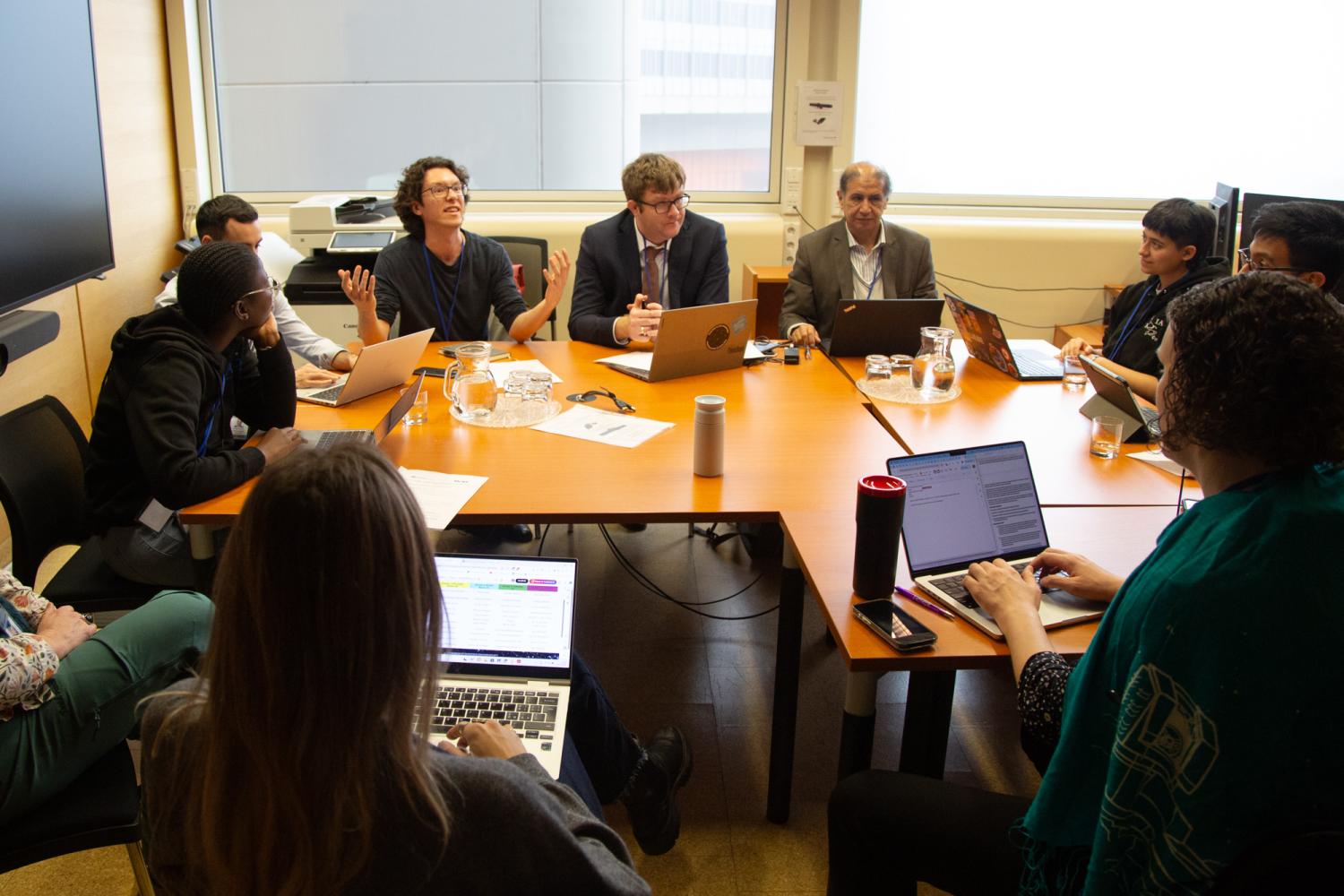
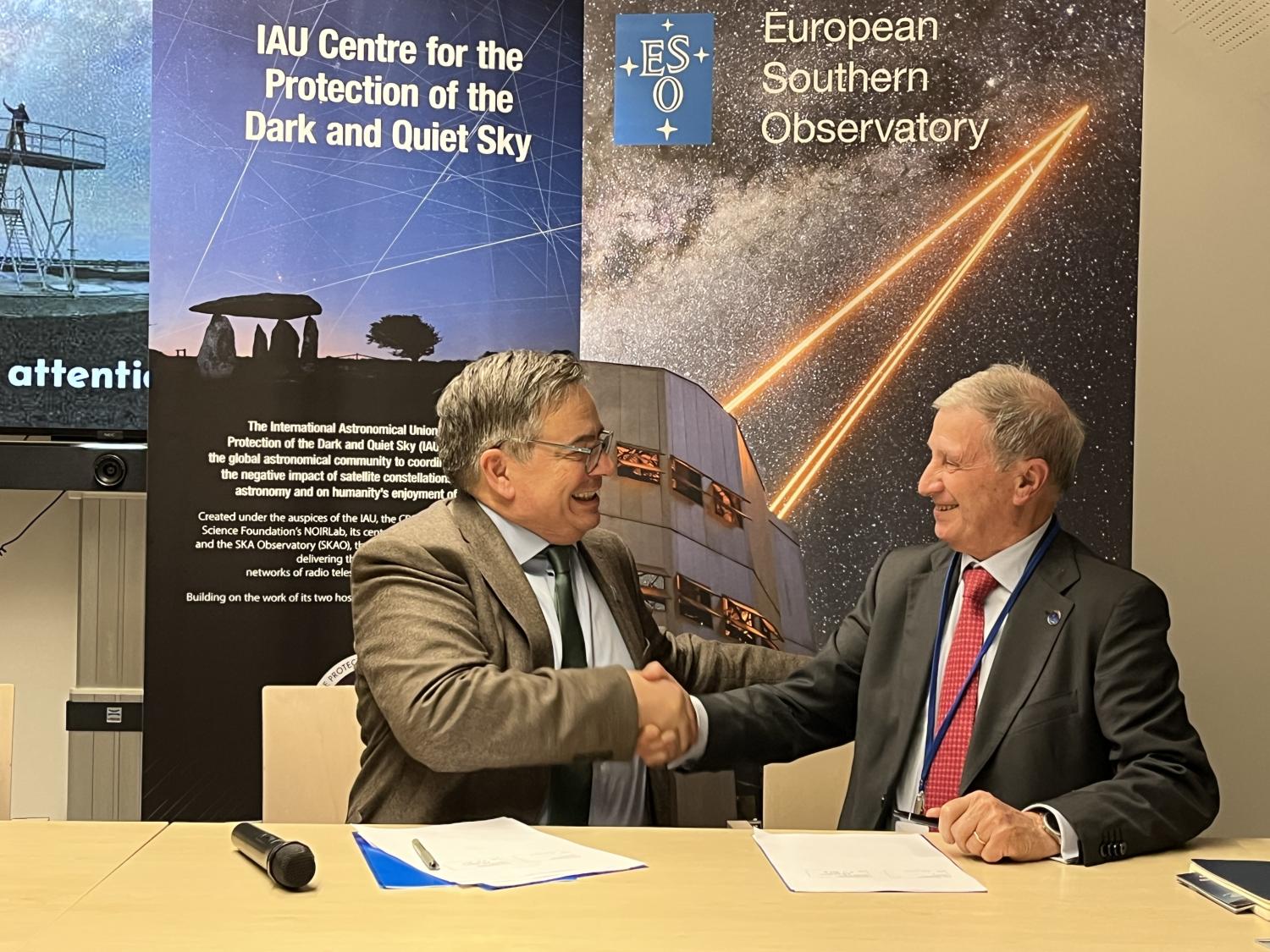
During the meeting, the IAU CPS welcomed the European Southern Observatory (ESO), a fellow observer on COPUOS, as a new contributing partner following a signing ceremony. ESO operates a variety of telescopes across three observing sites in Chile including the Very Large Telescope, and has been an advocate for protecting dark and quiet skies for many years focusing efforts on light pollution and interference from satellites.