




France becomes the 14th member state of SKA Observatory
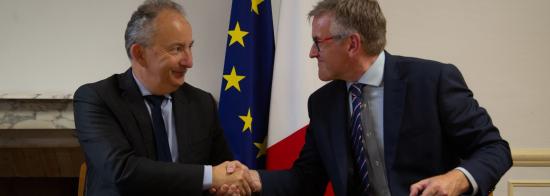
The French President Emmanuel Macron, signed the documents of accession in March, completing the national ratification process, and the membership has now come into force.
With France's accession, the Observatory’s membership has doubled since it was established in 2021.
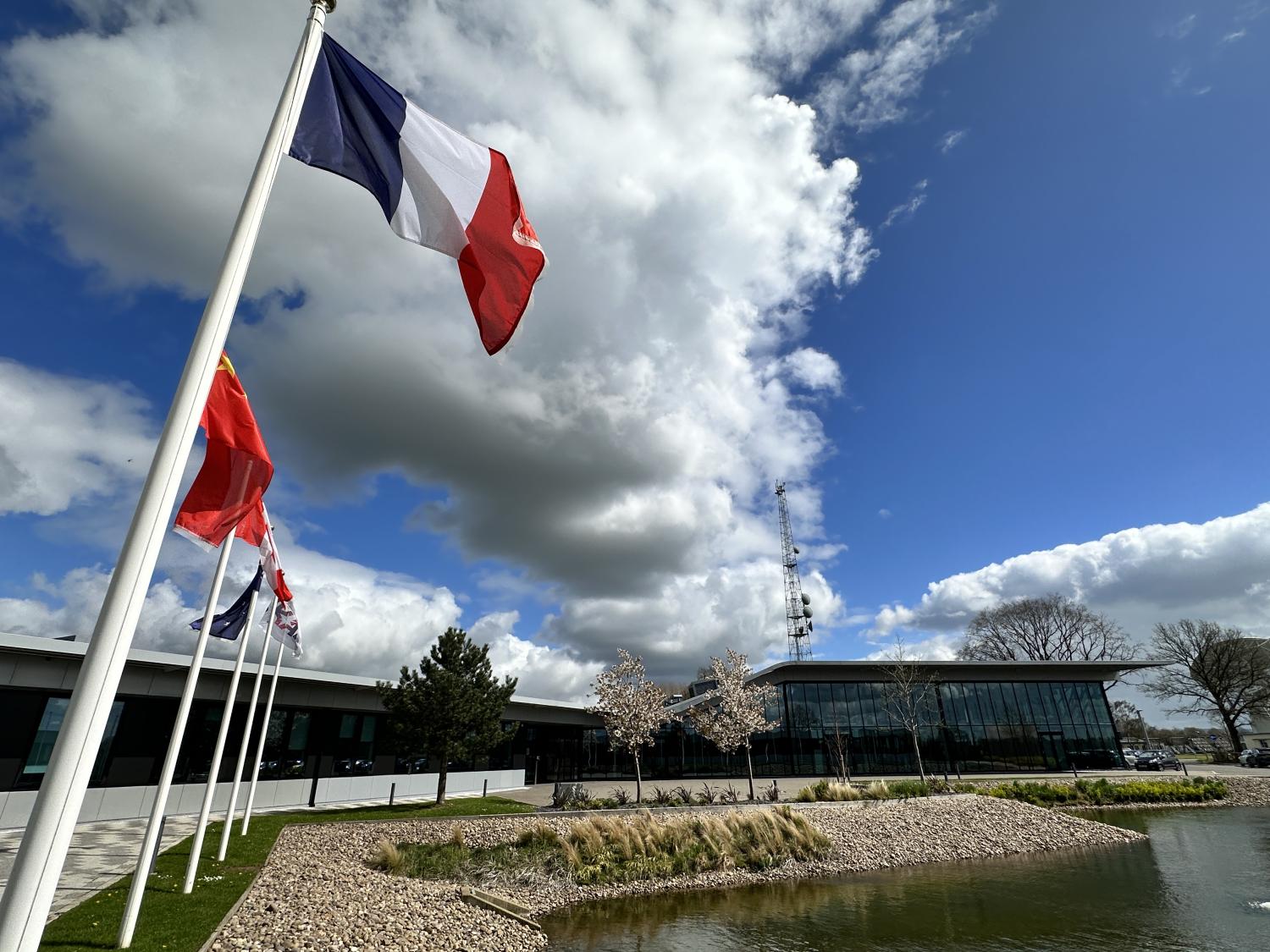
President Macron announced France’s intention to join the SKAO during a 2021 state visit to South Africa, one of the two SKA telescope host countries alongside Australia, after the project became part of the French roadmap for research infrastructures.
“After many years of contributions to the SKA project, it is a great pleasure to welcome France as a member of the Observatory,” said SKAO Council Chair Dr Filippo Zerbi.
“As well as a national legacy of excellence in astronomy across centuries, French institutions’ expertise in supercomputing for big science makes France an invaluable partner as the SKAO progresses towards early science operations in the coming months.”
The SKA project has been a top national priority for the French astronomical community for over a decade. This has been further demonstrated by the strong mobilisation of the French scientific community for the SKA national conference, held in Meudon in May 2026, bringing together around 200 participants as the latest in a series of successful SKA-related meetings in France.
National coordination of SKA activities in France is carried out by SKA-France, which brings together nine academic partners : CNRS, Inria, CEA, Observatoire de la Côte d’Azur, Observatoire de Paris-PSL, Université de Bordeaux, Université d’Orléans, Université Paris-Saclay, Université de Strasbourg.
“France is proud to join SKAO, which is building the world’s largest radio telescope arrays in this frequency range. This ambitious international collaboration demonstrates what countries can achieve together, far beyond what any could accomplish alone. France is contributing through its industry and scientific community - astronomers, computer and data scientists - building on decades of investment in radio astronomy and coordinated national efforts to support SKAO’s mission,” said Jean-Luc Moullet, Director-General for Research and Innovation at the Ministry of Higher Education, Research and Space.
French expertise in exascale computing has been critical to the development of high-performance computing solutions for the SKA telescopes, and in 2025 France was awarded its first SKAO construction contract, with computing specialists Bull tasked with delivering the science data processor (SDP) hardware for the Observatory. The SDP will process and reduce huge data volumes from each of the SKA telescopes to make detailed images of the sky. The first deployments of hardware will begin later this year in Australia.
France has also established the Extreme Computing Lab for Astronomical Telescopes (ECLAT), a research and development laboratory that brings together public and private partners to tackle the major computing and data challenges posed by the SKA telescopes. In parallel, France actively participates in SCOOP, a technical group within the SKA project devoted in particular to efforts aimed at minimising the energy consumption of the SDP computational activities. French industry may participate to the project in the next future in other areas as well.
Meanwhile, the French scientific community has been deeply involved in preparations for SKA science, with representation in 13 of the 14 Science Working Groups, including co-chairing roles in the Cradle of Life and Cosmology groups. France also brings strong expertise in the field of the Interstellar Medium (ISM), a cross-cutting area that spans several Science Working Groups. The country is also home to NenuFAR in Nançay, an SKA pathfinder extending the international LOFAR telescope, and to the Nançay Radio Telescope, which has played an important role in major discoveries related to the detection of the gravitational-wave background through pulsar timing.